Northern Ireland Plant Health Labels (NIPHL): What Nurseries Need to Know for the 2026 Growing Season
NIPHLs: An Overview
With new regulations phased in between October 2023 and July 2025, the 2026 growing season marks the first full season where all growers must comply with the Northern Ireland Plant Health Label (NIPHL) requirements.
At Bluepoint, we’ve seen a noticeable increase in enquiries from Northern Ireland customers looking for compliant labels and suitable printing solutions. Early on, there was some uncertainty around exactly what information was required, how the label should look, and where it needed to be placed.
Now that DEFRA guidance has been clarified, we can confidently advise growers on what’s required — and recommend practical, compliant labelling solutions that won’t disrupt day-to-day operations.
What Is a Northern Ireland Plant Health Label (NIPHL)?
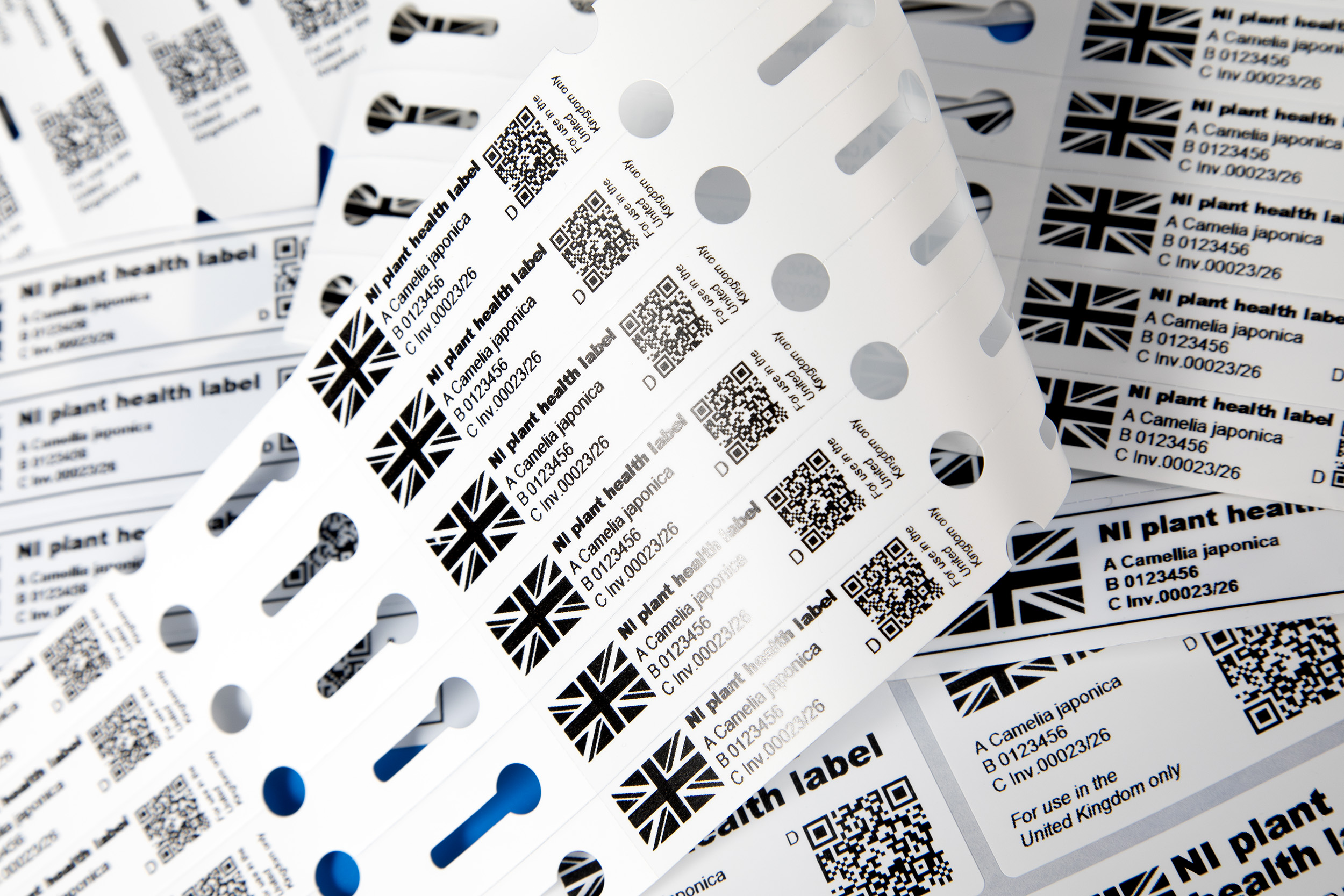
The NIPHL is required when moving plants and plant material from Great Britain to Northern Ireland. While similar in purpose to a UK Plant Passport, it has specific content and formatting rules that must be followed exactly.
Importantly:
- The NIPHL must be its own standalone label
- It cannot include company logos
- It must follow a fixed structure and layout
- Failure to comply can result in consignments being delayed or rejected — something no grower wants during peak season.
What Must be Included on a NIPHL?
DEFRA have set out some guidelines that need to be followed by anyone shipping plants from the UK to Northern Ireland.
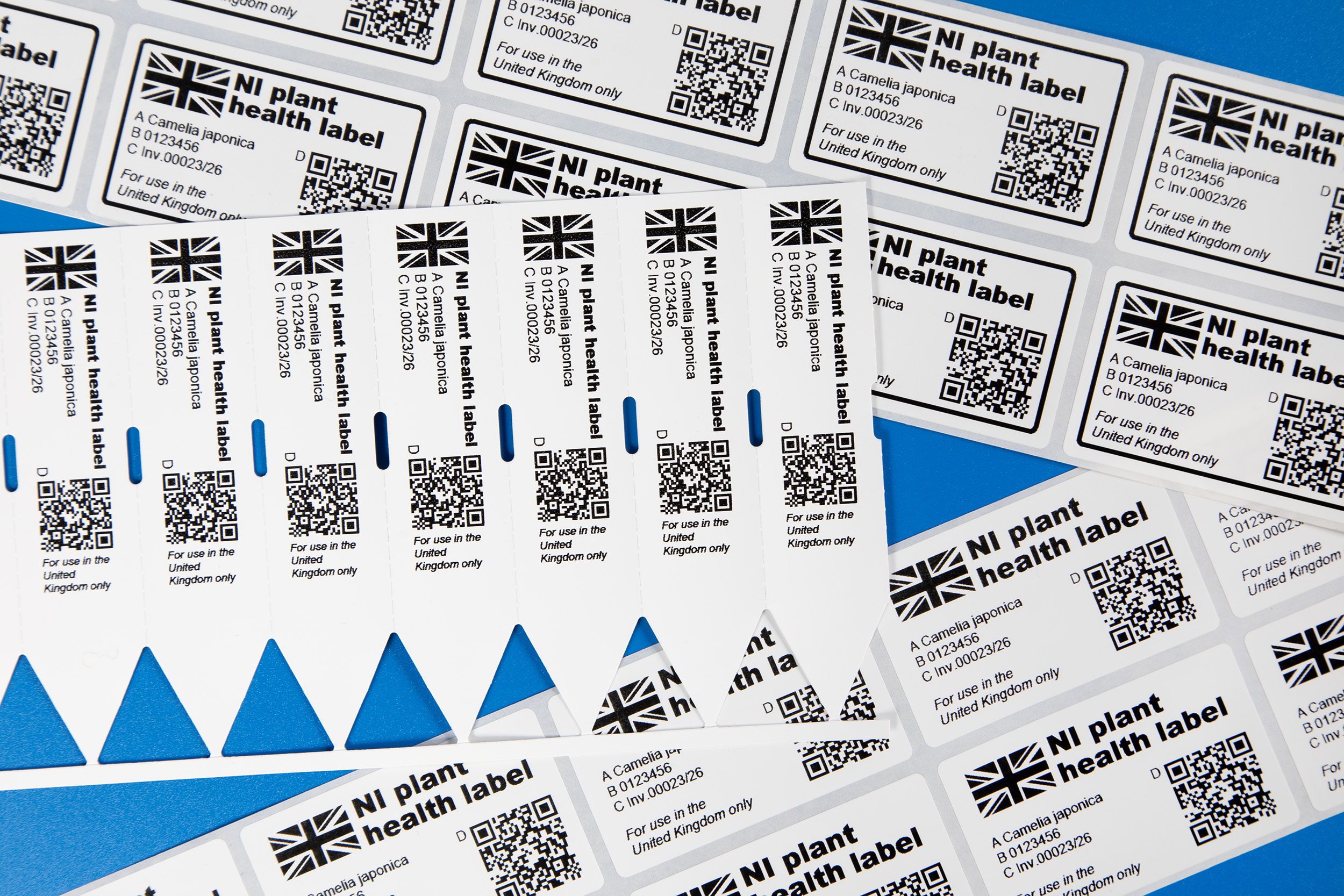
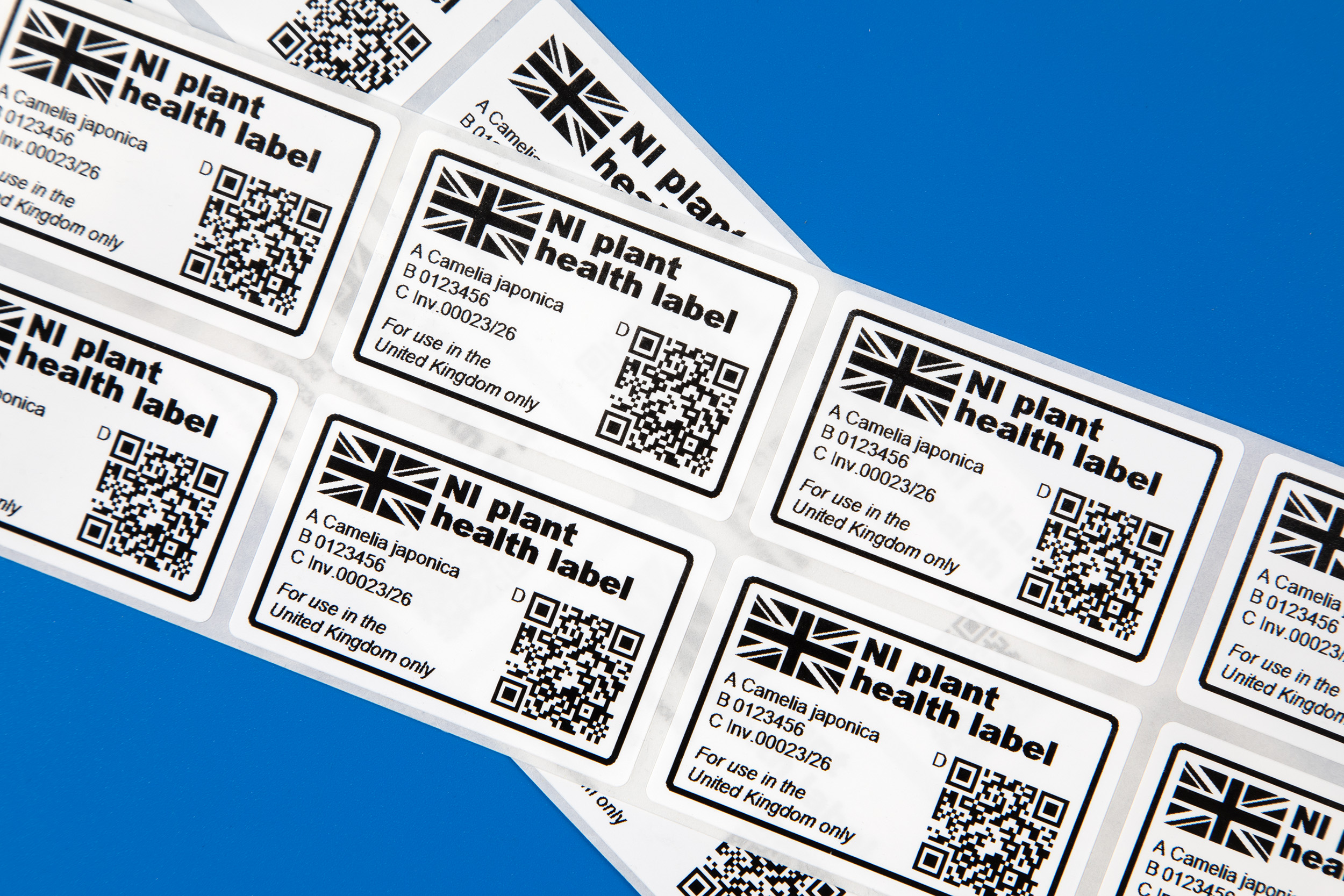
At the top of the label, you must include the Union Flag and the words “NI plant health label”. The Union Jack can be printed in either full colour (if you’re using a colour laser printer) or in black and white (most plant passports tend to be printed using a thermal transfer printer).
After that, the label should then list the following 4 letters – A, B, C and D – with the following information next to them:
A: Botanical name
In this first section, you must list the botanical name for the plant that you are shipping, and this should be the full genus and species name, for example, Camellia oleifera or Rhododendron dekatanum. Variety or cultivar names are optional here.
B: NIPHL authorisation number
As a grower moving plants to Northern Ireland, you will have been issued a unique NIPHL authorisation number from either APHA (The UK Animal and Plant Health Agency) or SASA (Science and Advice for Scottish Agriculture).
C: Traceability code
In this space, you need to include a unique traceability code for your products. This is so that the consignment can be traced or identified, and can be an identifier unique to you, for example, an individual serial number, a week or batch number, or an invoice number. Basically, it needs to link back to your records should anyone need to trace the origin of the plants you are moving.
D: QR code
As a registered grower, you will have been issued a QR code from APHA or SASA confirming scheme organisation – this would have been emailed to you. This needs to be included here.
You must use the QR code unless there’s a very good reason not to, and it should only be omitted in exceptional circumstances. If you’re unable to use a QR code for a NIPHL, you’ll need to add the sentence ‘Complies with Article 10 of Regulation (EU) 2023/1231’ to the label instead.
Printing and Attaching Your NIPHL
As well as following the above guidelines for designing your label, there are also guidelines that regulate HOW to attach your labels to your consignment, following the exact same guidelines for UK plant passports (the following is taken from DEFRA):
- Must be attached to the smallest package in which you transport your plants or plant material.
- If you move the same commodity on pallets, boxes, trays or in bags, the plant passport must be attached to each of those individual units.
- Multiple plant species can be listed on a single plant passport as long as traceability is provided for all regulated plants or plant material listed on the plant passport.
- If there’s a mix of plants on a trolley and it’s going directly to a retail outlet (for example, a garden centre), you can just attach the passport to the trolley. The passport must be attached to the trolley itself. It cannot be a delivery note with the driver.
- Plants or plant material on the trolley can have a passport attached to that trolley at any stage of the supply chain if they are:
- Homogeneous in composition (of the same species in the same format) and origin
- Going to the same destination
The NIPHL must be attached to the smallest unit transported or shipped, so this could be on an individual plant or for a single unit such as a box, tray, bag or trolley.
Choosing the Right Labels for your NIPHLs
Now you know what you need to put on your NIPHL, you’ll need to choose the right kind of label to use – and Bluepoint are able to offer some great options for you to choose from.
Most of our customers choose from one of three options for their Northern Ireland plant health labels, and for each of these, we’re able to offer them in a range of shapes and sizes, suitable for in-house, on demand printing with either a thermal transfer of laser printer:
Self-Tie or Loop Lock Labels
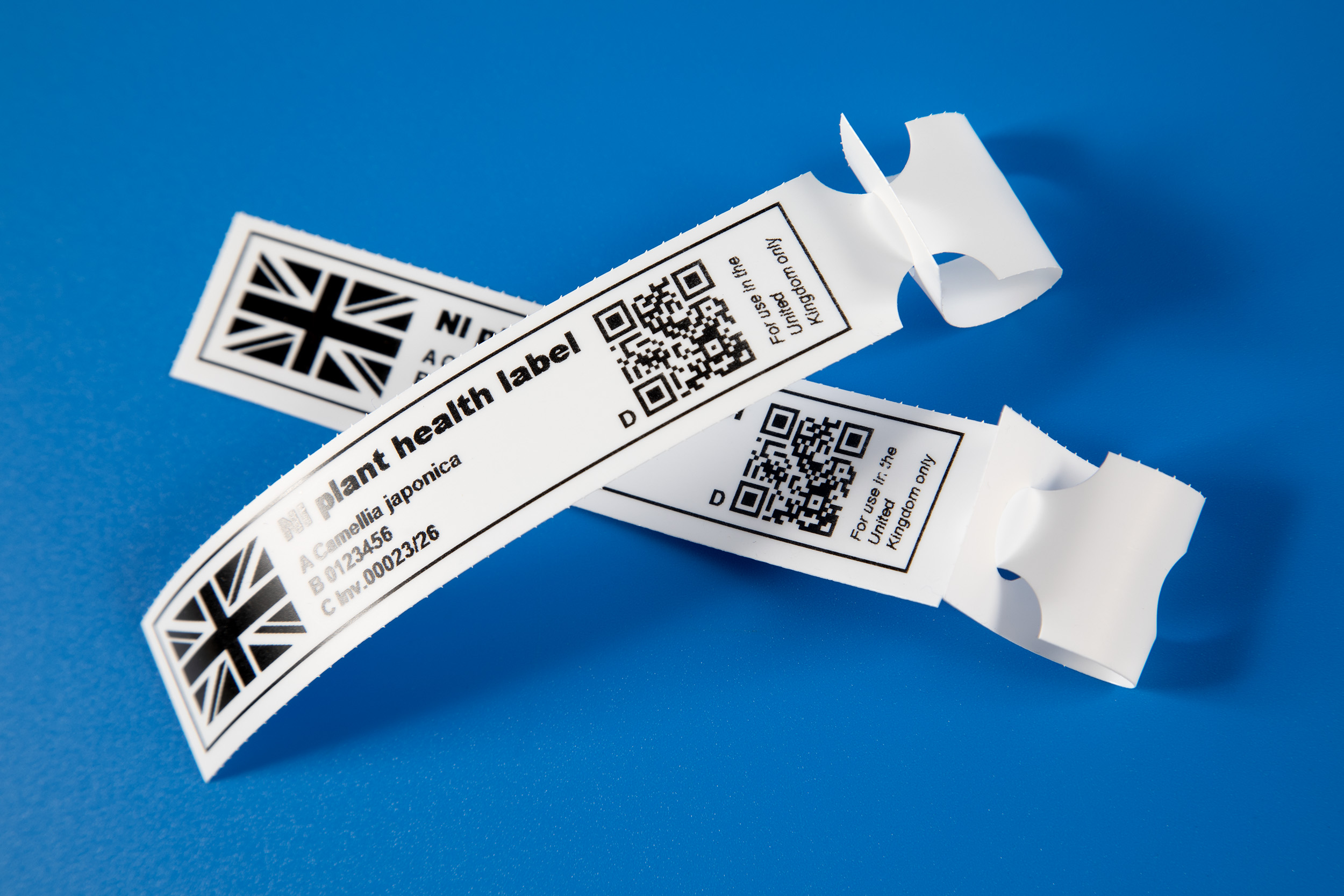
Very easy to use, self-tie labels simply loop around an object – such as a tree branch or edge of a wire tray – and thread back through its own cut out, locking in place with a specially designed notch.
Our self-tie plant labels come either on a roll for thermal transfer printing, or in sheets for laser printing – we recommend the OKI C650 laser printer if you choose to go down the full-colour printing route.

Stick-In Labels
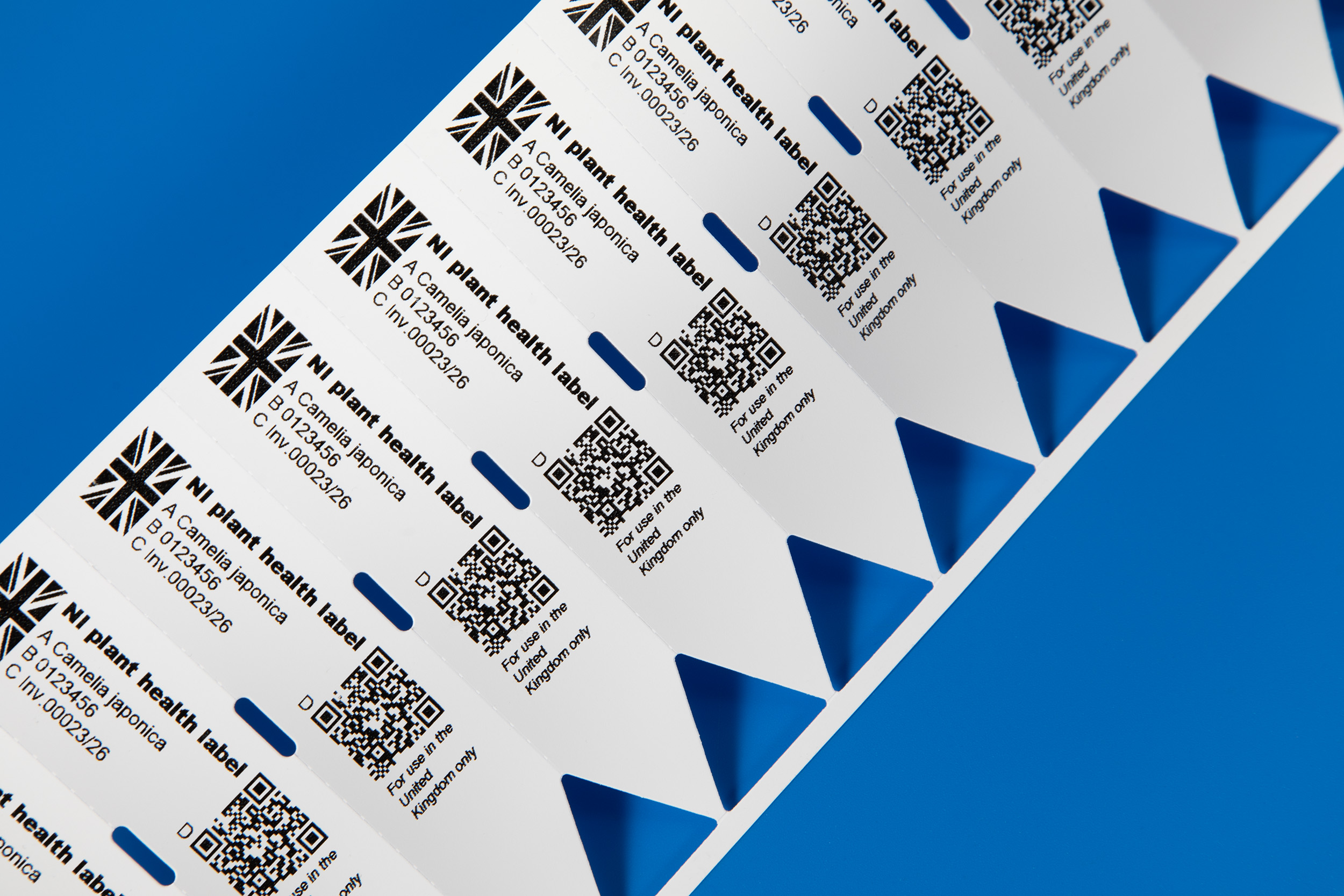
Also known as plant plot labels, or dibber labels, stick-in labels do exactly what it says on the tin – stick into a plant pot!
Coming in an array of shapes and sizes, and again suitable for thermal transfer or laser printing, stick in labels offer an ideal solution for in-house, on demand printing of your NIPHLs.

Self-Adhesive Labels
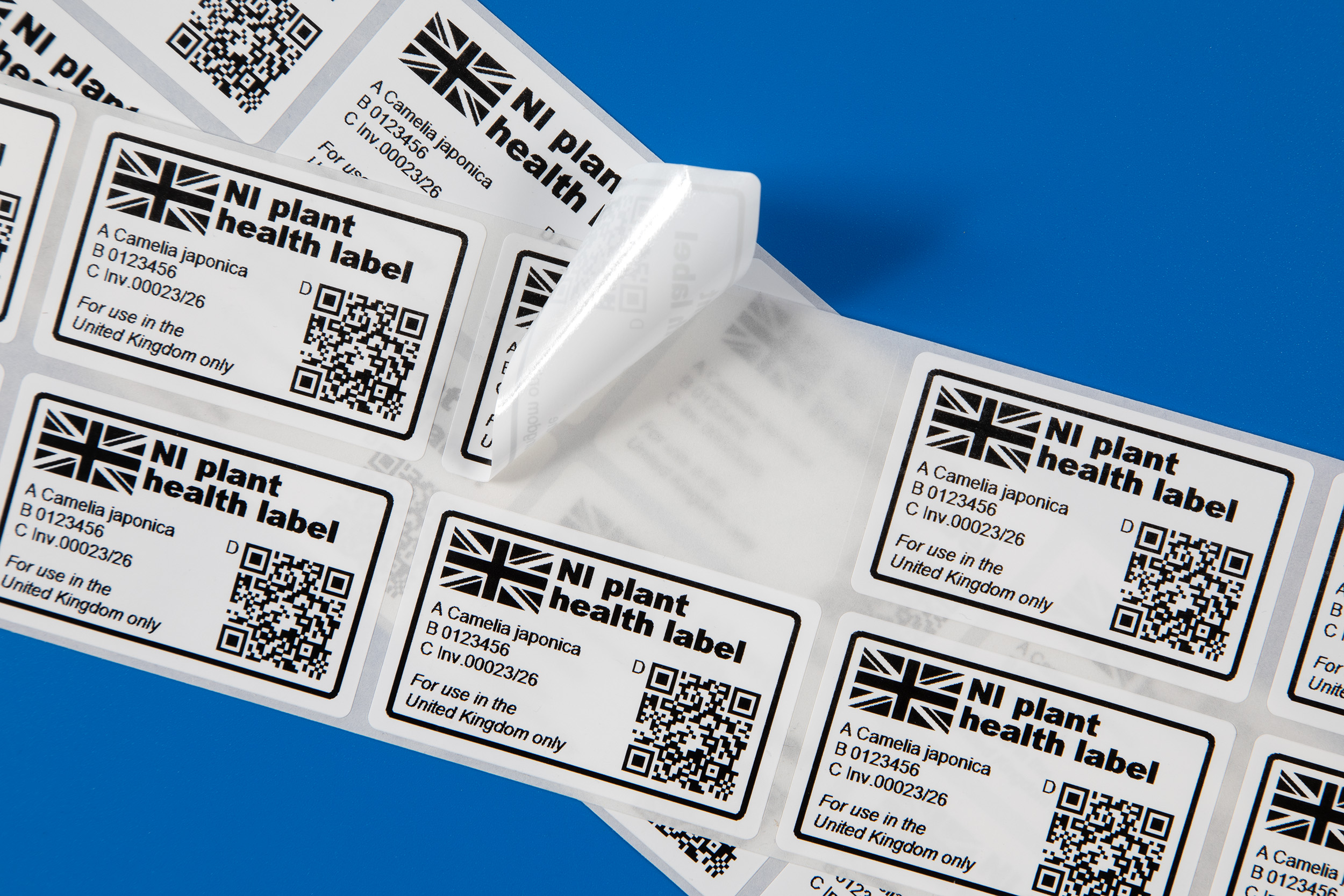
Made from advanced synthetic materials, our-water-proof self-adhesive labels are built to perform. Using ultra-strong adhesives, Bluepoint’s stickers offer reliable adhesion to wet, cold, uneven and even dirty surfaces – the perfect NIPHL solution for nurseries and growers!
As before, Bluepoint are happy to offer our self-adhesive labels on rolls or in sheet form suitable for both laser and thermal transfer printers, and they come in a wide range of industry standard shapes and sizes, and we even supply post-consumer recycled labels too!

Printer Software and Templates
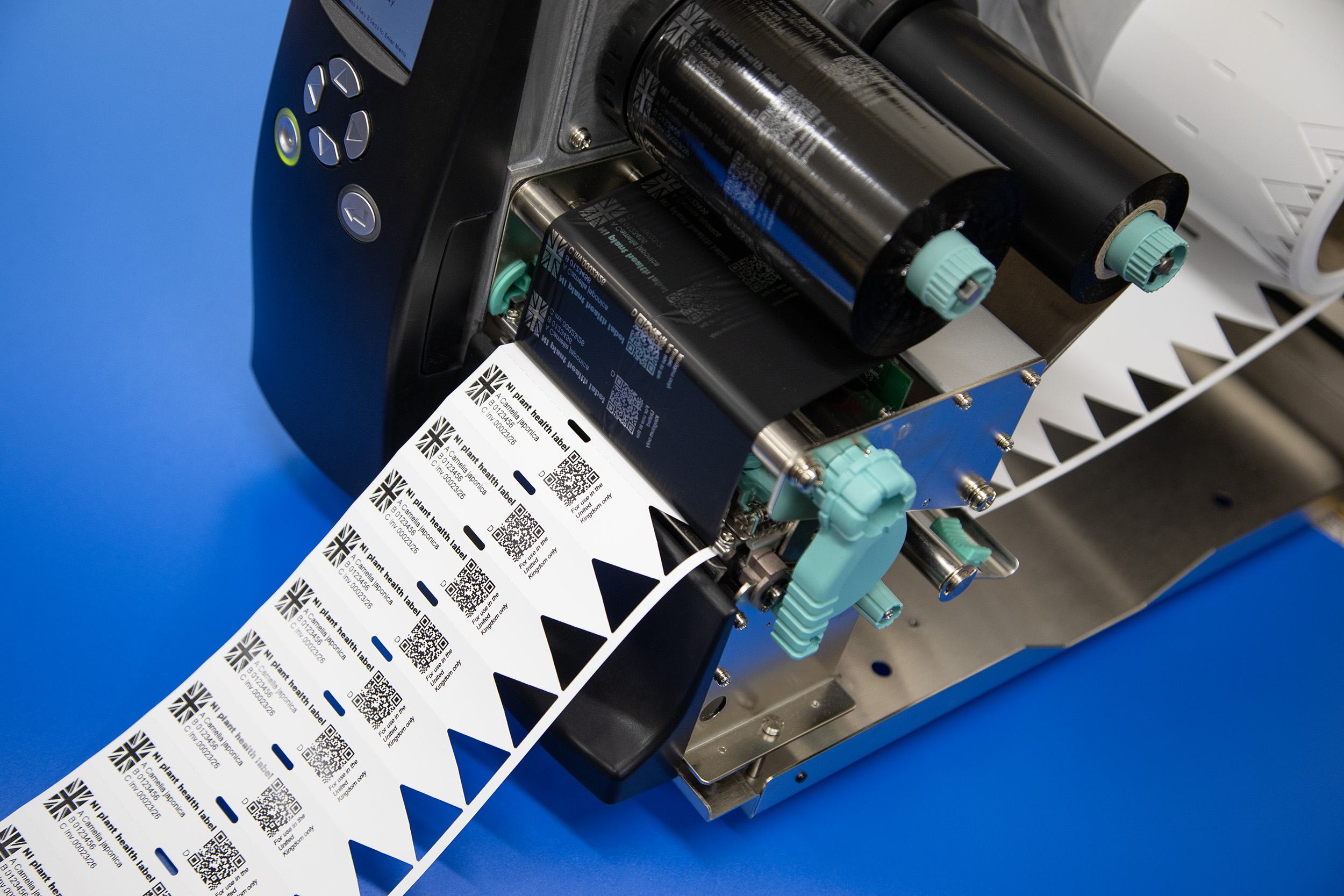
If you’re a grower, and have printed your labels before, no doubt you’re familiar with label printing software. Different platforms are used depending on whether you’re using a laser printer, such as the industry-standard OKI C650 full-colour laser printer, or a thermal printer from manufacturers such as TSC, Godex, Zebra or Toshiba.
Whatever software you’re using, NIPHLs are easy to set up and print using the guidelines featured above.
And, if you’re short on time, Bluepoint can provide you with ready to print label templates for the leading printing software, including EnLabel, Bar Tender and GoLabel – perfect for a fast-printing setup for self-tie labels, stick-ins or self-adhesives. All you have to do is update the text fields and QR code and you’re ready to print!
Talk to our friendly team today about printer software and templates for your NIPHLs – call us now on 01392 927 030 or email us on sales@bluepointtags.co.uk
Fast Delivery on Plain Tags and Labels – The Bluepoint Online Store
If you need to print your own Northern Ireland plant health labels, Bluepoint stock a wide range of common shapes and sizes in our online store. With a range of labels including self-tie labels, stick-ins and self-adhesive labels, you can browse and buy from the comfort of your own home, with no minimum order quantity, and next day delivery available on all stocked items.
To browse our store now, click the link below: