
Why Are Plastic Labels Still Used - And Can They Be Recycled?
An Introduction
The use of plastics has been debated for many years now, so why do industries, such as horticulture, steel production and chemicals, still rely on plastic labels and tags?
The answer is simple, and it comes down to durability and being fit for purpose.
Why plastic labels are still widely used.
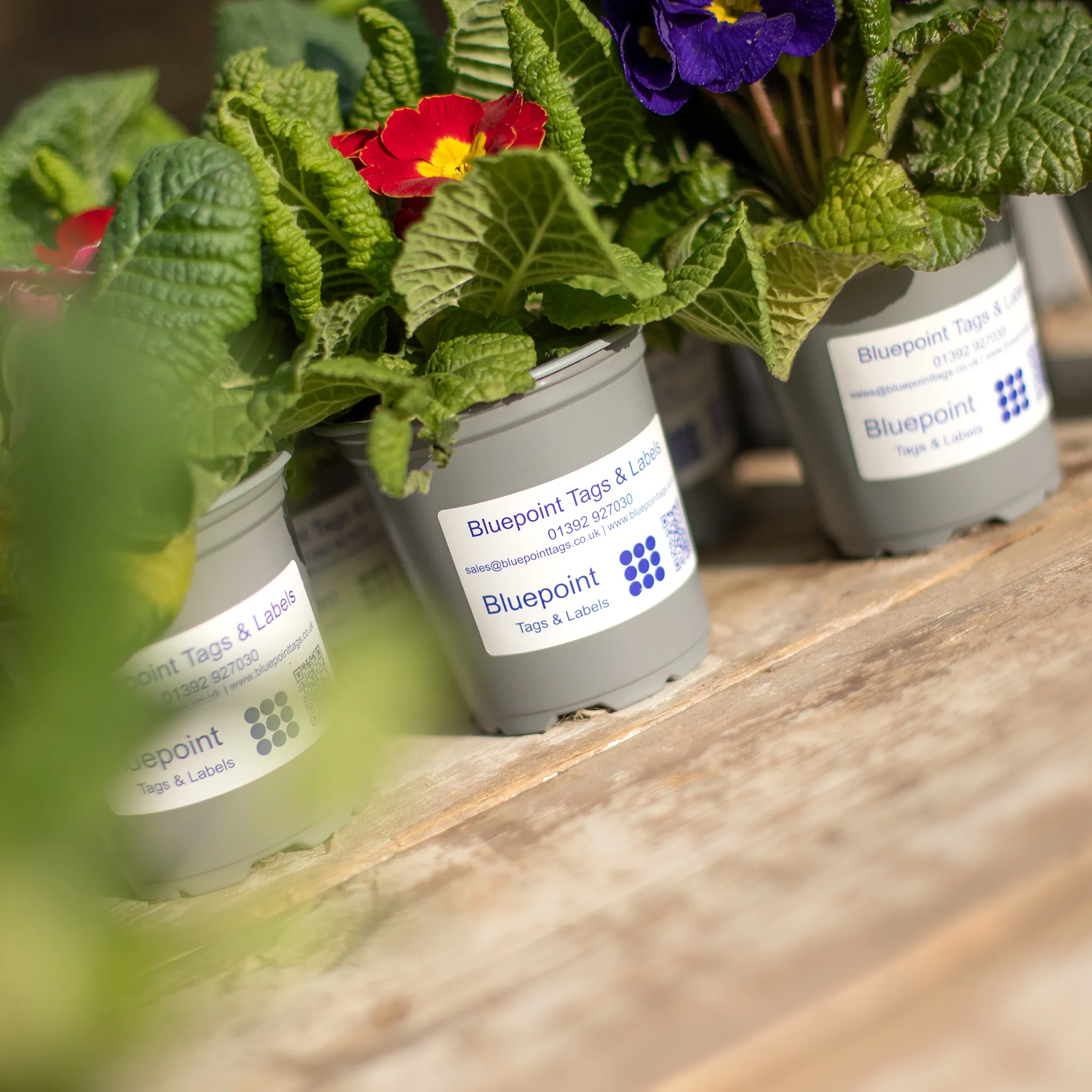
For industrial identification labels, clear legibility is essential for growers and manufacturers, and product traceability and compliance can fall apart if a label becomes faded or damaged. Labels must be durable and able to stand-up to environmental factors such as exposure to water, temperature ranges and UV, as well as contact with dirt, chemicals, and knocks and abrasion during handling and transport. A damaged label or tag will create both waste and confusion.
For this reason, synthetic, or plastic, labels are still the go-to product for long-lasting product identification, and they can even help to reduce waste. A label that lasts the entire lifecycle of a plant may actually create less waste than replacing failed paper alternatives multiple times.
Can plastic labels be recycled?
In short, many plastic labels can be recycled, but it depends on the material type, local recycling systems, contamination, adhesives and inks. In fact, if labels are correctly returned to the circular economy through recycling, they can actually prove to be a more-sustainable material choice than paper-based alternatives once their long-lasting durability is taken into account.
At Bluepoint, we’re proud to have a number of synthetic material choices that are readily recyclable and can play a part in circularity, reducing the reliance on single-use plastics.
Recyclable options
At Bluepoint, we manufacture our tags and labels form recyclable synthetic materials wherever possible, with some of our most common materials listed below:
PrinPlas

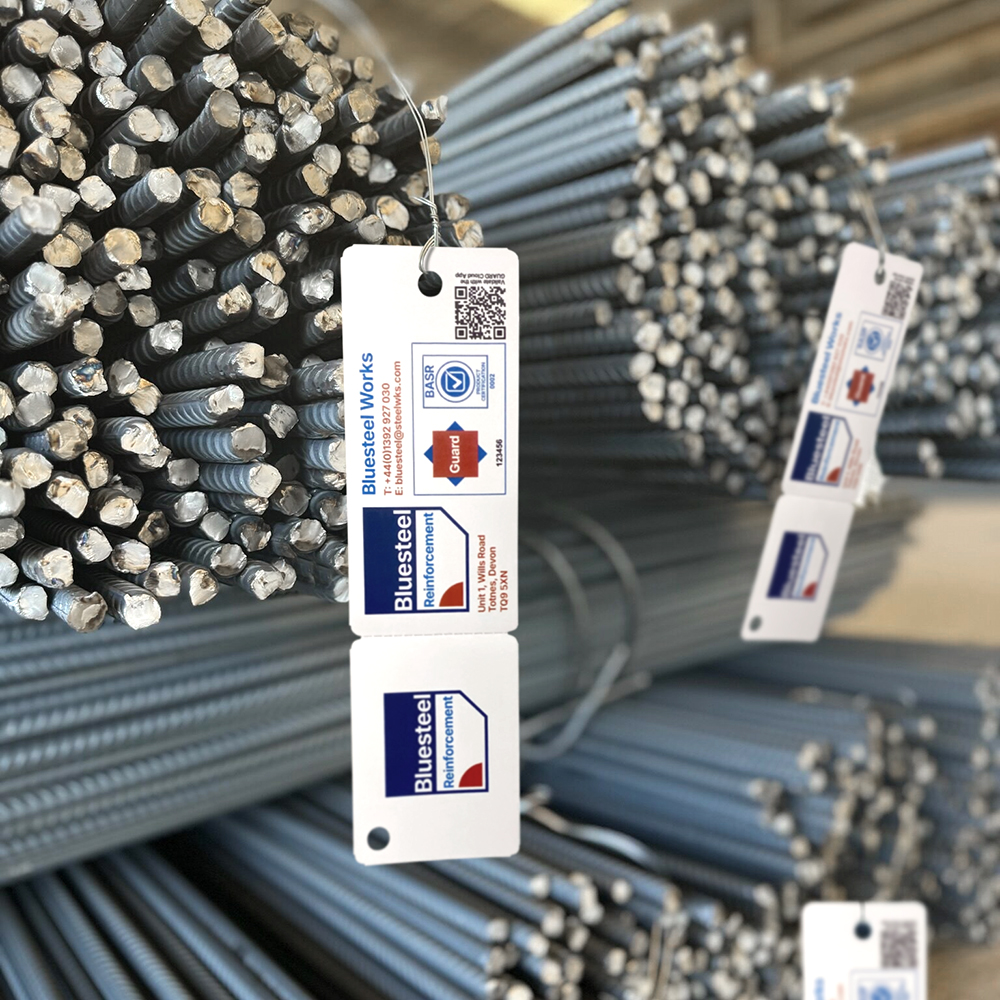
PrinPlas is a durable white PET material with a specialist matt coating on both sides, PVC-free and fully recyclable, giving excellent printer feed and print reception. Particularly suited for full-colour laser printing, especially with the OKI C651 laser printer, PrinPlas is the material of choice for Bluepoint’s sheeted self-ties, stick-ins, bed cards and swing tags, and is commonly used by the horticulture and steel industry, with high resistance to environmental conditions such as exposure to UV, water, temperature fluctuations and abrasion.
PolyTac High Laser
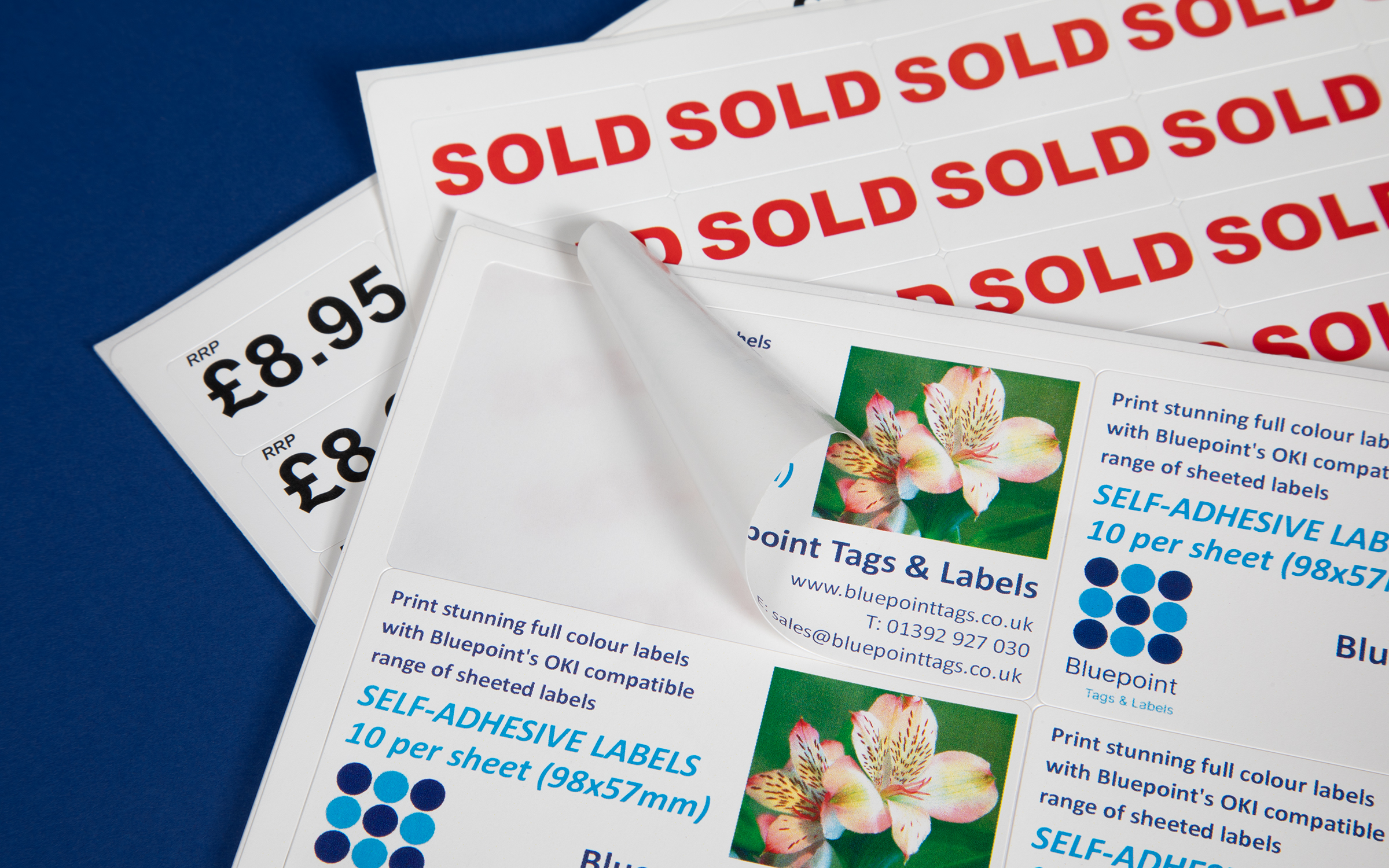
PolyTac High Laser is a self-adhesive PP material used predominantly for self-adhesive labels in sheet form. With BS5609 accreditation, meaning that the marine-grade adhesives are used, this material has a very high bond, and is the perfect choice for shipping and chemical labels. With a specialised coating, PolyTac High Laser is best suited for full-colour laser printing and is the perfect choice for the OKI C650 and C651 printers.
PolyTac Wet
Widely used in horticulture and the construction industry due to its excellent resistance to weathering, UV exposure and its water-resistant high tack adhesive, PolyTac Wet is a matt coated low-density PE material which is readily recycled. Designed for thermal transfer printing, PolyTac Wet features specialist permanent adhesives that resist prolonged outdoor environments where other labels may fail, sticking fast to uneven, curved and contaminated surfaces.
PolyTac Wet Gloss
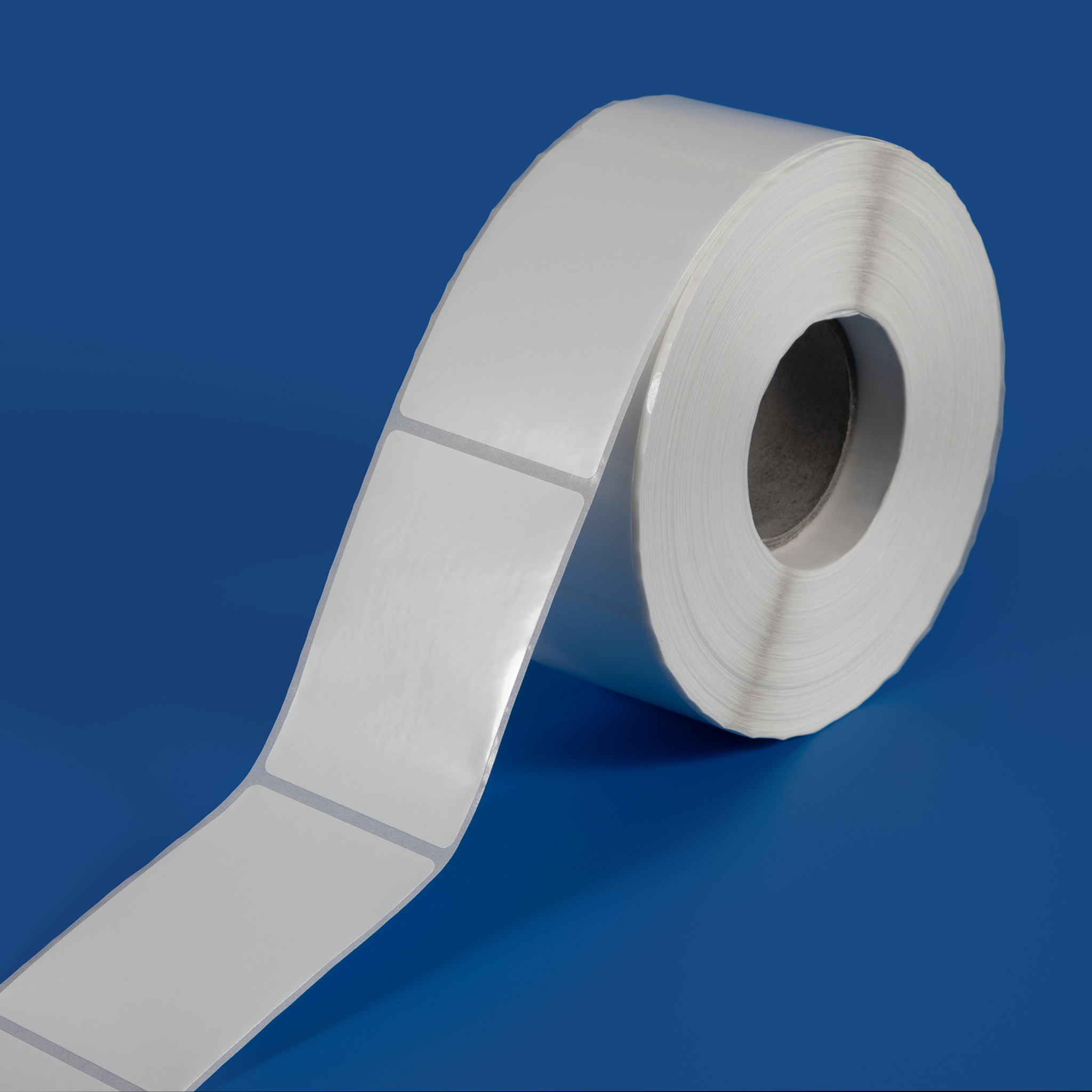
A gloss finish PP, PolyTac Wet Gloss is another in Bluepoint’s line of top selling self-adhesive materials. The glossy surface makes this label and tag material an ideal solution for wet, oily or otherwise dirty environments where other self-adhesives would struggle to adhere and stay in place, ensuring that product identification and traceability remain in place. Made from readily recycled PP, PolyTac Wet Gloss is yet another material that can be easily returned to the circular economy.
PolyTech

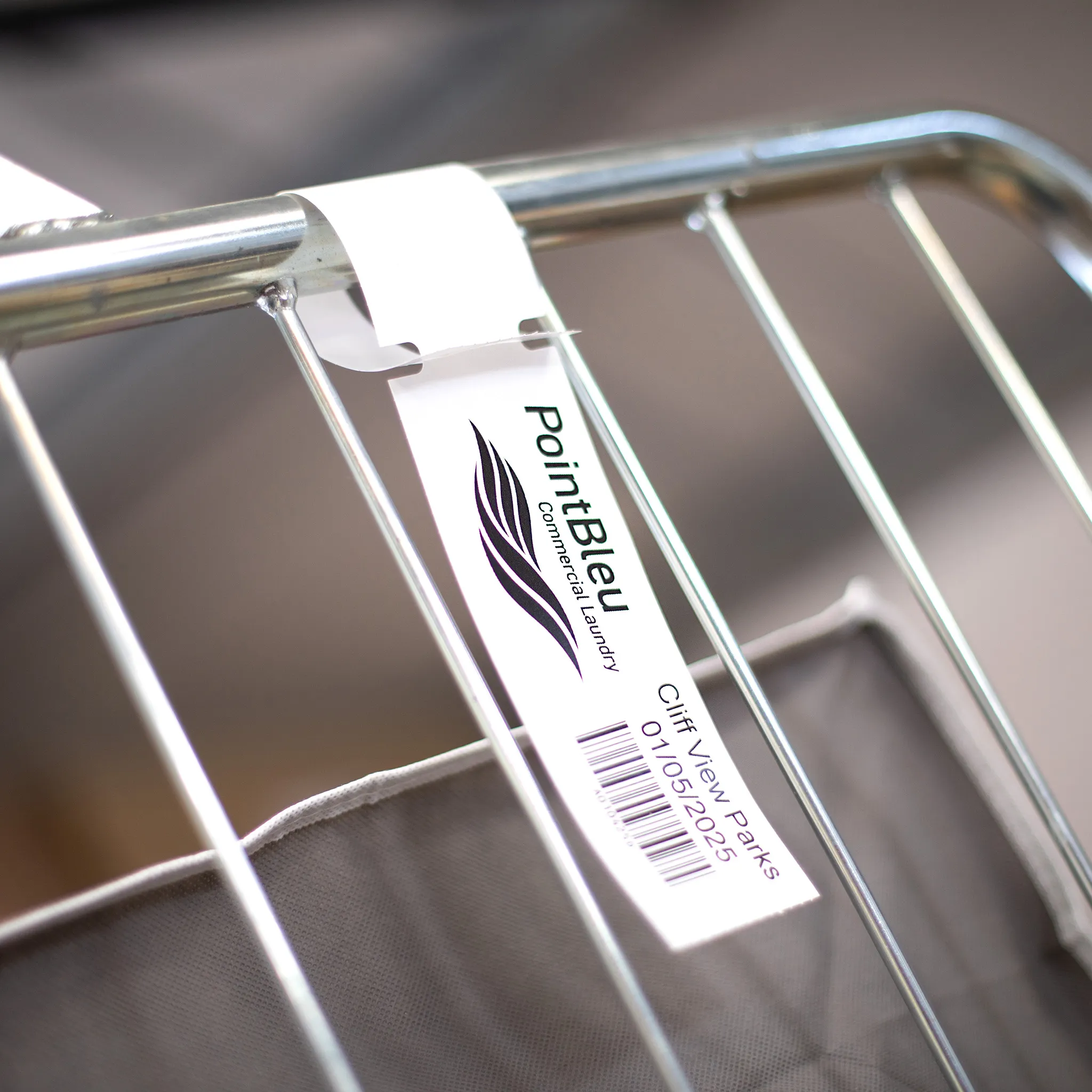
PolyTech is a biaxially-oriented HDPE material in plain white as well as vibrant pre-coloured options, engineered for optimum print reception with thermal transfer printers. With high resistance to UV, temperature fluctuations and exposure to water, PolyTec is perfectly suited for both horticulture, and with it being highly resistant to rips and tears, for the steel and timber industries too. It’s the perfect material choice when outdoor exposure of 12+ months is required.
Tyvek
Tyvek® is a soft, but durable, label and tag material from DuPont®. Although it looks and feels like a paper material, Tyvek® is actually a spun-bonded synthetic HPDE material which is fully recyclable. It can be supplied in both sheet and roll form, and exhibits great print reception from a wide variety of printers. It is commonly used in horticulture where it is chosen for it's durability, and for event and security wristbands where it's lightweight construction and soft-to-the-touch feel make it perfect to be work on the wrist across several days.

Recycled options
PolyTac EcoPCR
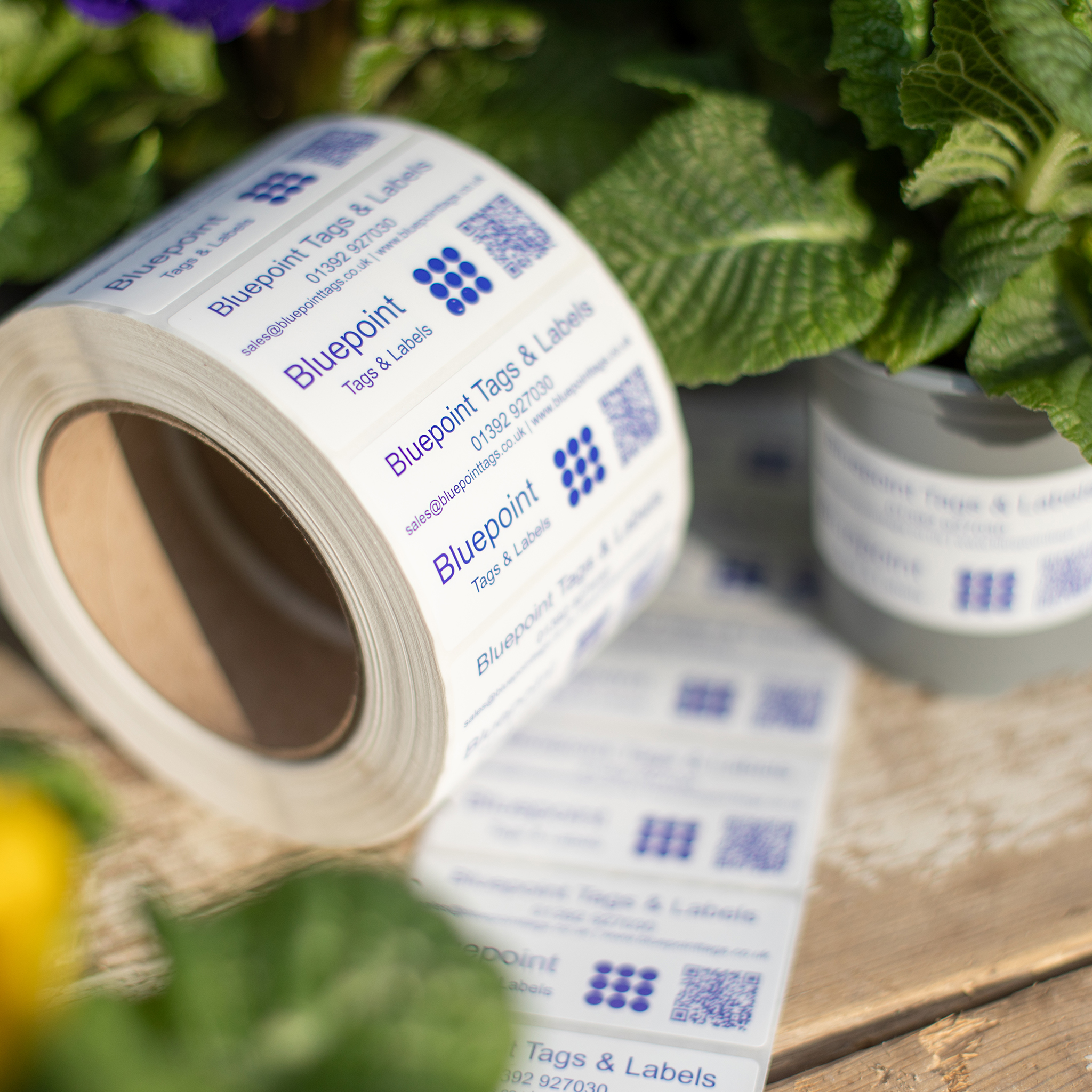
In addition to our regular, recyclable high-performance synthetics, Bluepoint recently introduced their PolyTac EcoPCR – a versatile, durable, strong and eco-friendly self-adhesive label material that is perfectly suited to a range of industrial uses.
PolyTac EcoPCR is made from recycled LDPE, where only Post-Consumer Recyclate (PCR) plastics are used in the production of the film – i.e. plastics that have previously been used in domestic environments, such as soft packaging and plastic bags.
With excellent print results through thermal transfer printers and good hand-writing acceptance, PolyTac EcoPCR is an excellent choice for traceability solutions where a sustainably-sourced, eco-friendly material choice is required.
PVC – 30% recycled content

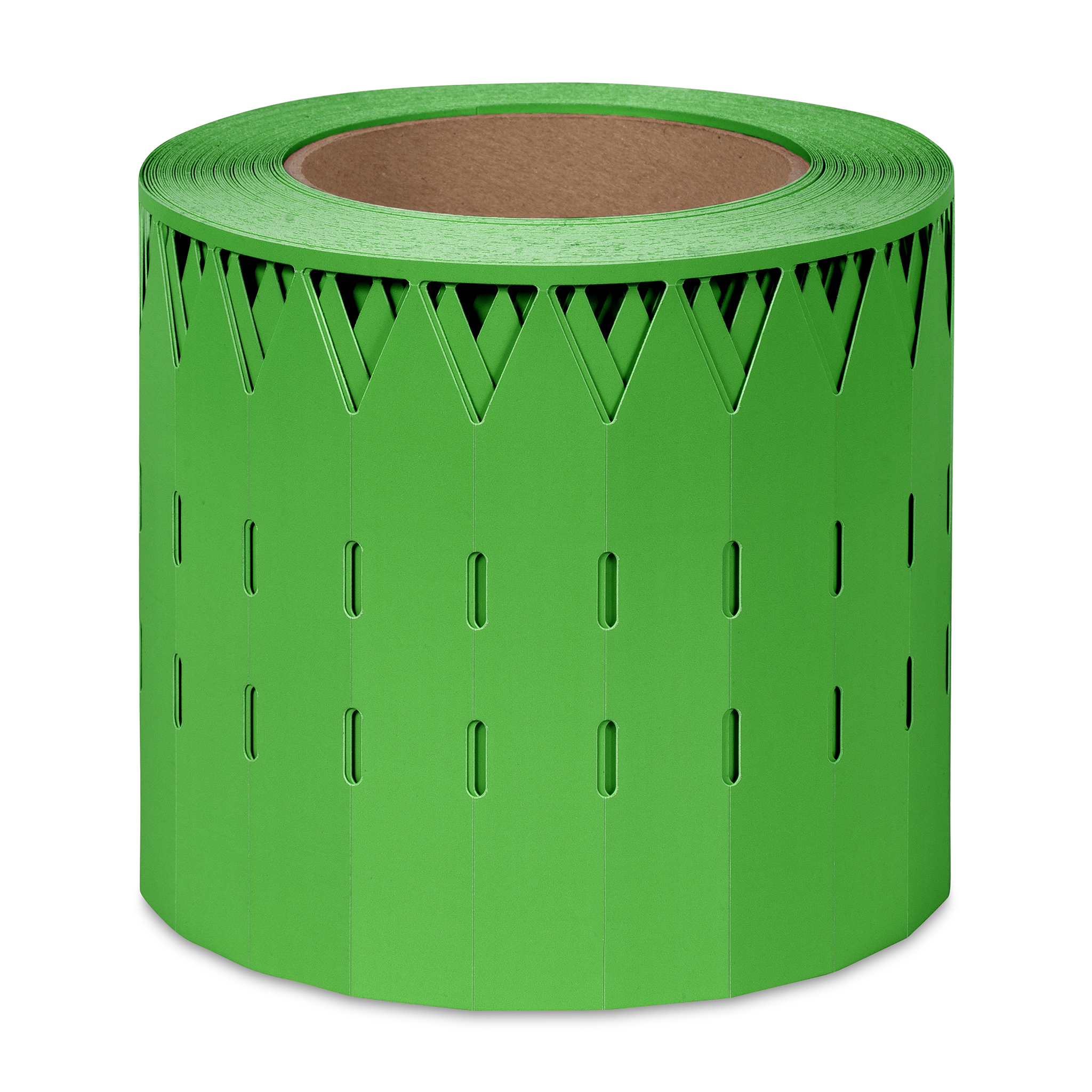
Although not fully recycled, our recyclable PVC material now features a 30% recycled content, reducing our reliance on virgin plastics and providing a more sustainable material choice for our customers. Used by a range of industries from horticulture to steel manufacture, PVC is the perfect choice for labelling which requires a high level of rigidity, and is optimised for use with thermal transfer printers.
The real sustainability question
Sustainability isn’t always as simple as “plastic vs non-plastic.”
It’s also about:
- lifespan,
- recyclability,
- reduced replacement,
- lower material usage,
- responsible disposal,
- recycled content.
We’re finding that in an increasingly eco-minded world, synthetics still play an important role and are much more “fit-for-purpose" that paper-based products in many industrial applications. At Bluepoint, we’re proud to manufacture our labels in a range of materials that can be recycled and returned to the circular economy, as well as having fully recycled options to choose from as well.
Conclusion
Plastic labels continue to play an important role because of their durability and practicality, particularly in demanding outdoor environments. However, the industry is evolving, with greater focus on recyclable materials and recycled-content alternatives that help reduce environmental impact without compromising performance.
To find out more about the range of durable label and tag materials that Bluepoint have on offer, speak to our team of labelling experts today!


